
This Question Could Change Your Life
How to make difficult life choices easier
Introduction
Questions are great tools to have in your arsenal to help increase self-awareness and to force you to think about things that can sometimes go overlooked.
These overlooked areas can include big and important things, such as what you should be doing with your life.
Now, you don’t always have to employ the help from a professional coach to be able to think about these questions; you can use them as journaling prompts, or ask yourself them when you find yourself with a quiet moment.
The Powerful Question
The question that this edition of my newsletter revolves around doesn’t come from the world of coaching or from a dusty old philosopher.
It comes from Chris Williamson, the host of the podcast Modern Wisdom (8th biggest podcast on the planet).
The Question:
If your life were a movie, and people were watching up to this point, what would the audience be screaming at the screen, telling you to do with your life?
Read it, read it again, and then sit with it for a while.
Why This Question Is So Powerful?
Whilst this question isn’t as succinct as most coaching questions usually are, I think it’s powerful for the following reasons:
1. It evokes strong imagery
The thought of a whole cinema packed with viewers watching the entirety of your life is equal parts wonderful and scary.
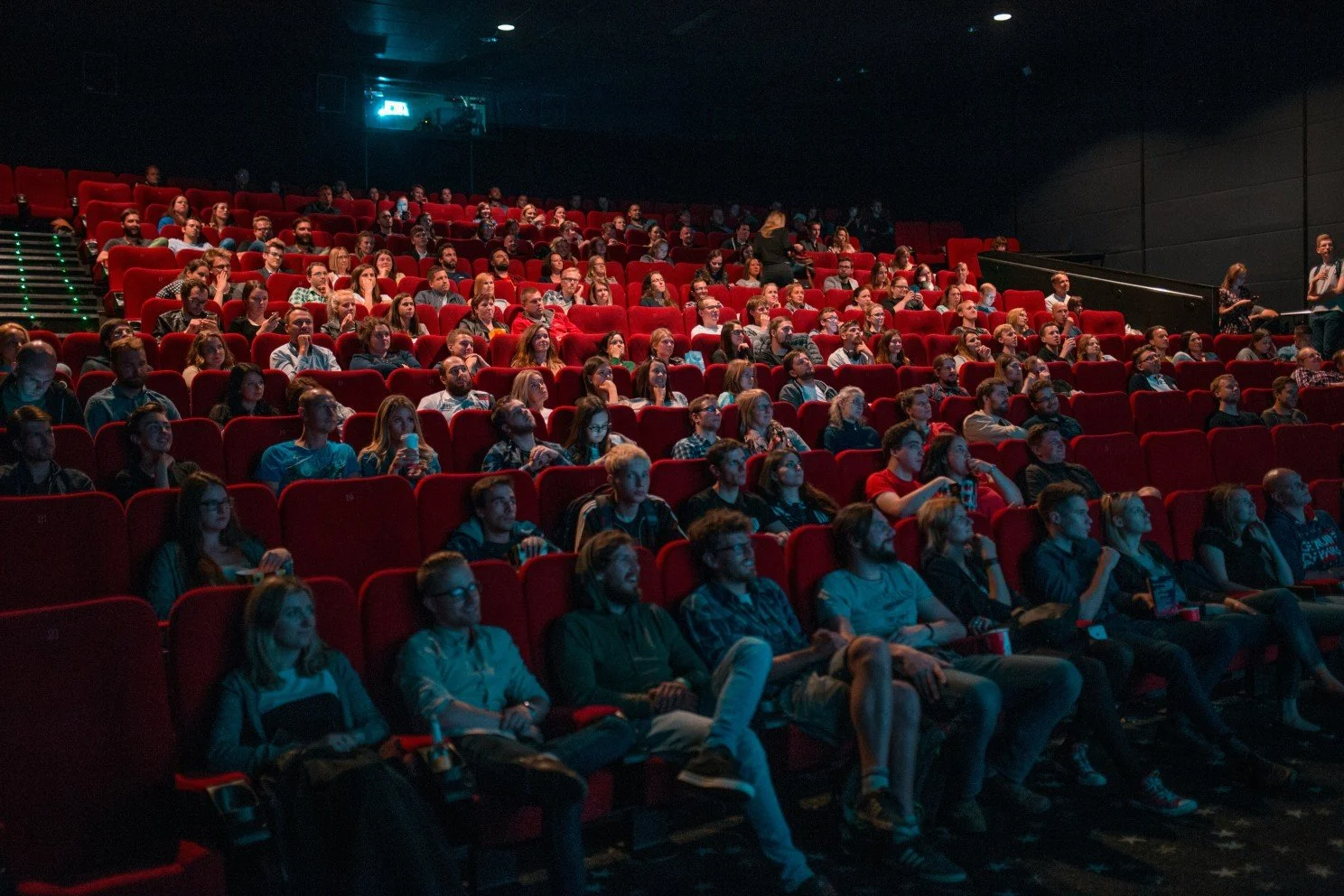
An (almost) packed cinema, watching your life.
To have this imaginary, but large, group of people watching the highs and lows of your life gives a certain weight to your future choices, which makes them seem even more important.
2. It provides an extreme outside perspective
This question doesn’t just get you to consider another perspective outside of your own, it gets you to consider a whole cinema’s worth of perspectives.
This enables you to see your situation from an almost objective standpoint, or at least a wide range of subjective standpoints.
This is similar to a technique in coaching called Perceptual Positions, where the coachee shifts physical and mental positions to that of themselves, a second person (typically someone they are in conflict with) and then an observer.
This helps to understand a wider perspective and increase empathy.
3. It highlights the obvious
The whole idea of this question is to get you to think about the burningly obvious, that you either are ignoring or cannot see clearly enough.
In the film analogy, it would be the audience screaming to the protagonist who the killer obviously is, or that the leading woman should leave her abusive boyfriend or any other cinematic trope that you can think of.
When applied to the film that is your life, it could mean:
You need to leave the job that you hate.
You should start that business you’ve always thought about.
You should ignore the criticisms from people you don’t respect, who are holding you back in life.
You should go travelling and actualise that dream you've always talked about.

You, achieving your dreams and living your best life.
4. It creates a type of extreme accountability
Have you ever watched a film where the protagonist or hero makes a terrible decision and the audience lets out a collective gasp of disbelief?
Do you want to let your imaginary audience down?
Do what they can see you should do, and what you know you should do.
When To Use This Question
This isn't a question that you can use in your journal on a daily basis.
It should be reserved for times when:
You're feeling stuck/lost in life.
You’re trying to create ambitious goals for your life.
You're at a crossroads and need to make a big decision.
Your instincts are warning you against a certain decision or path.
At suitable temporal landmarks (New Years, birthdays, other personal milestones).

Final Thoughts
As I mentioned at the start of this article, questions are great tools.
Questions, like tools, have specific uses and one tool or question can't be used in isolation to make lasting change.
Answering this question will increase your self-awareness and provide you with insight, but that's just the start of the work.
You have to then do the work and take your insights and decisions into the rest of your life.
If you need support or more accountability for this deep inner work, book your free Introduction Call to see how partnering with a trained Leadership Coach can help you.
Thank you to Chris Williamson for the question, and thank you for reading.
If you enjoyed it, please subscribe, share and follow me on LinkedIn.
